Month: November 2014

Review: Rifle/Pistol Low Light with Erik Lund

“If you are going to take the time to look, take the time to see.” -Erik Lund on scan processes

This was my third formal class with Erik Lund having previously taken his Dynamic Fighting Rifle and Performance Shotgun courses.  Erik was assisted in this class by Tod Lit.
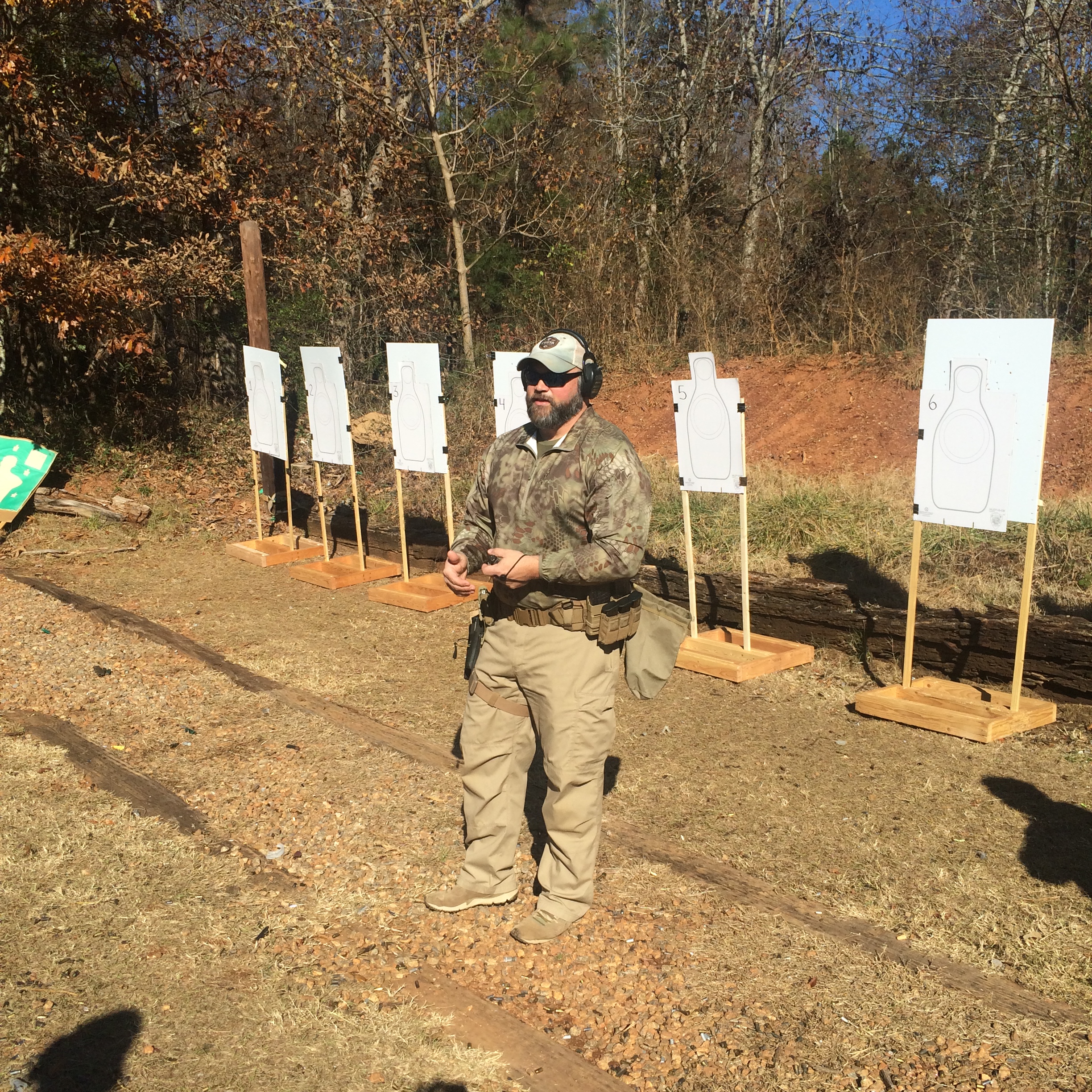
Erik Lund

Erik Lund


The class consisted of 11 students and began in the mid-afternoon and went well into the evening.  We began by practicing various handheld flashlight techniques in conjunction with our pistols.  We then practiced handheld light techniques with our rifles.  All of this was done while we still had daylight so that we could focus on the techniques.
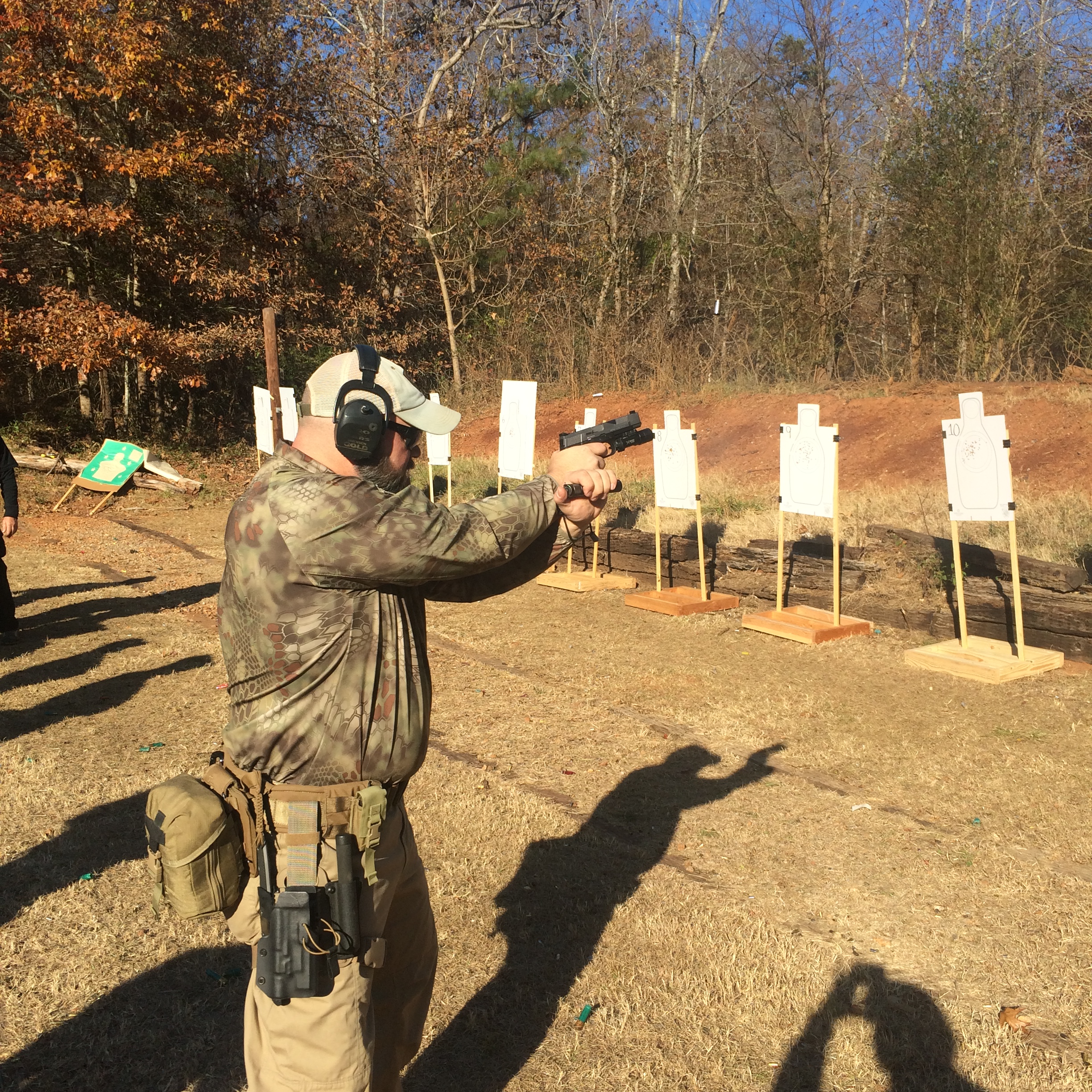
2014-11-29 15.07.41

Erik demonstrating the Harries Technique with a pistol

2014-11-29 16.33.41 HDR

Erik demonstrating the Harries Technique with a rifle

Of note, Erik recommends having some sort of retention device on a handheld light to aid in weapon manipulations.  He personally used a lanyard and would simply drop the light, perform a reload or malfunction clearance and then retrieve his light.  Another option demonstrated by Tod Lit was a light with a ring on it.  I didn’t have any such devices; so, I put my light back in the holder on my belt during manipulations initially, but later in the class I switched to stowing it under my arm.
70793

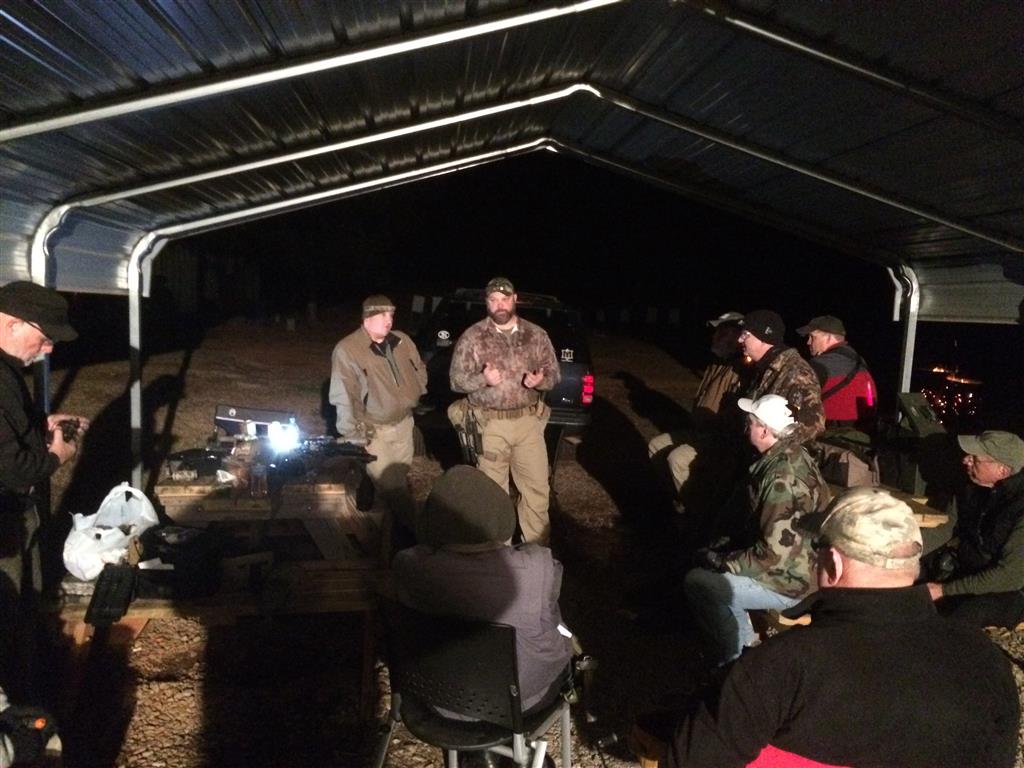
After we had practiced the techniques, we broke for dinner and then had a lengthy discussion on different low light technologies available including lasers, night vision and thermal.  The discussion included demonstrations of all of these technologies.  Some of this stuff is a language all of its own, especially for a guy that still runs iron sights on his rifles.
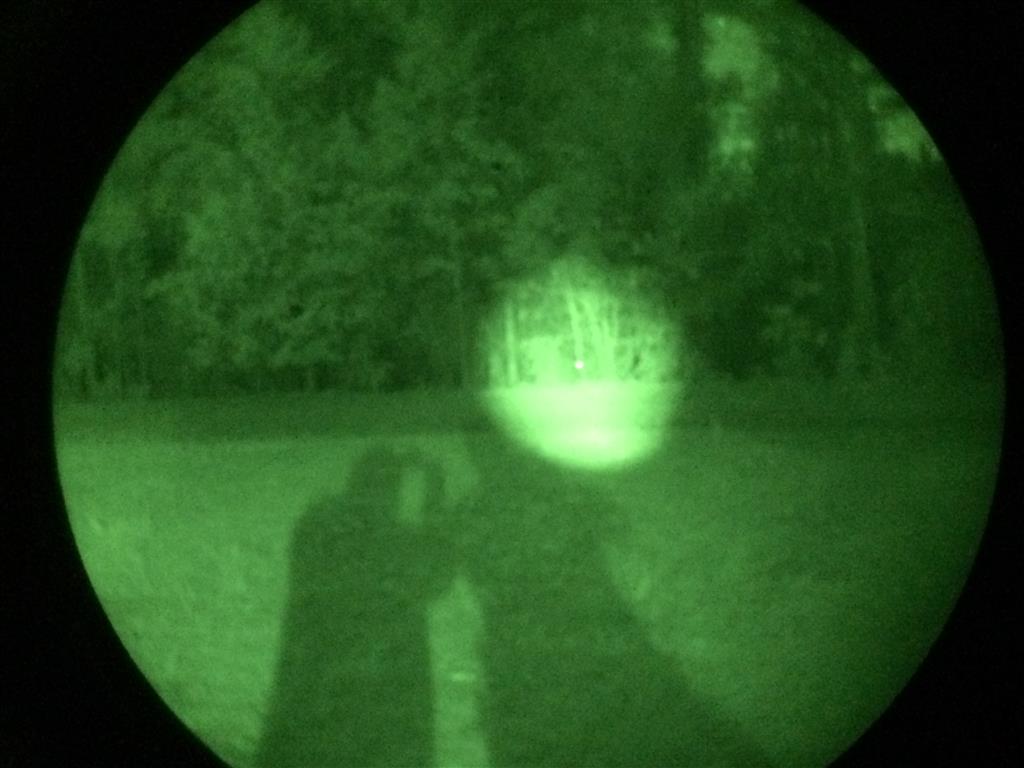
70790

Infrared seen through night vission

70828

Pistol fire seen through night vision

night vission

The author and Erik Lund


After the demonstrations were concluded, we moved back into a live fire segment using the same progression as in the beginning of the class.  After each of the handheld light techniques were used under live fire, we were allowed to begin using our weapon mounted lights.

The final live fire portions of the class involved shooting at 50 yards first to see how accurately we could place shots.  Then we ran a few evolutions in which we had to negotiate a barricade and hit partially obscured targets.  It is important to note that seeing the targets and making the shots was not difficult at all.  However, and this is a key point, true target identification at that distance was difficult.  Had the drills been judgement drills, I wouldn’t have taken the shots as I couldn’t definitively determine that they were “hostile” targets.
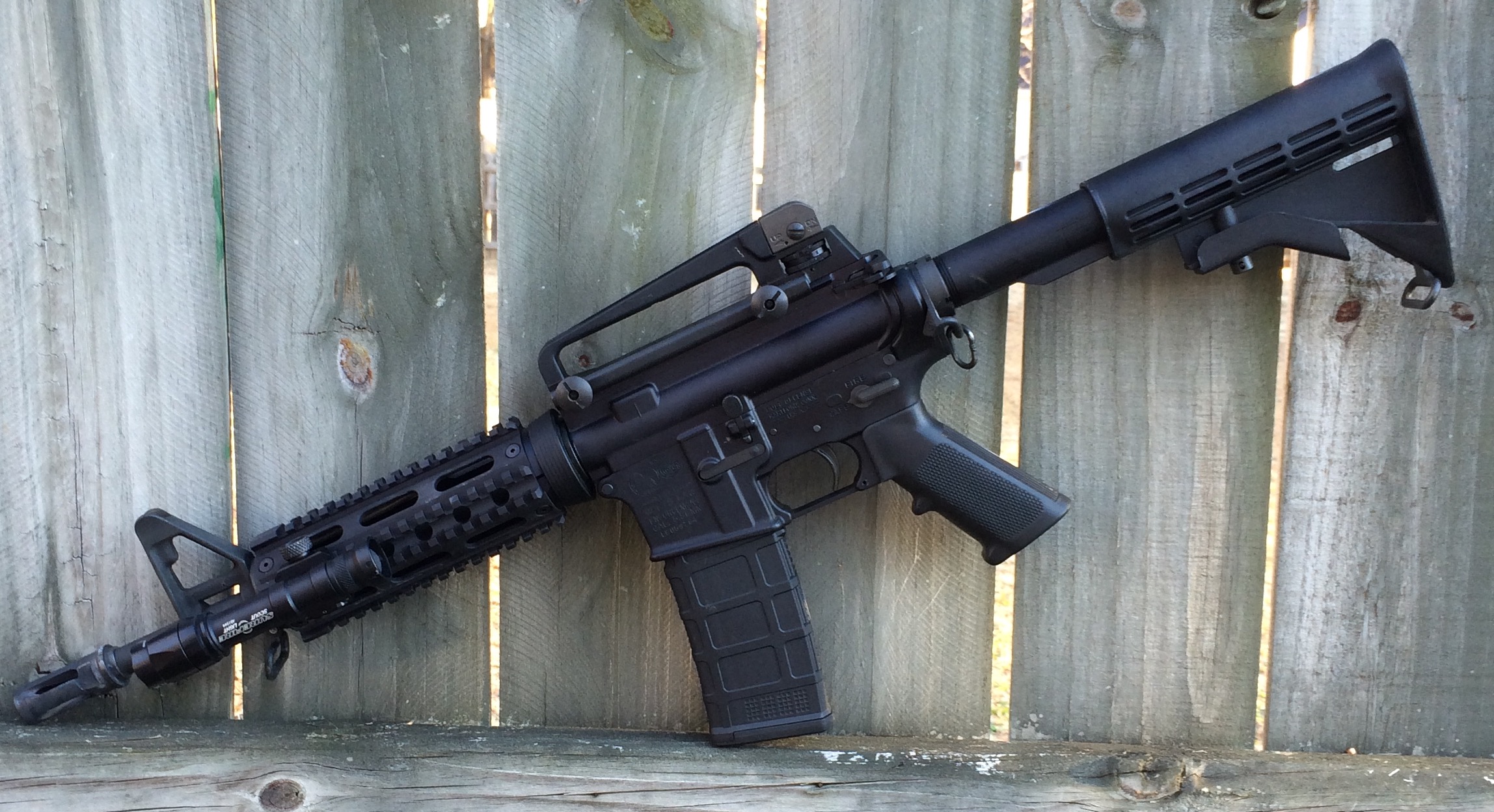
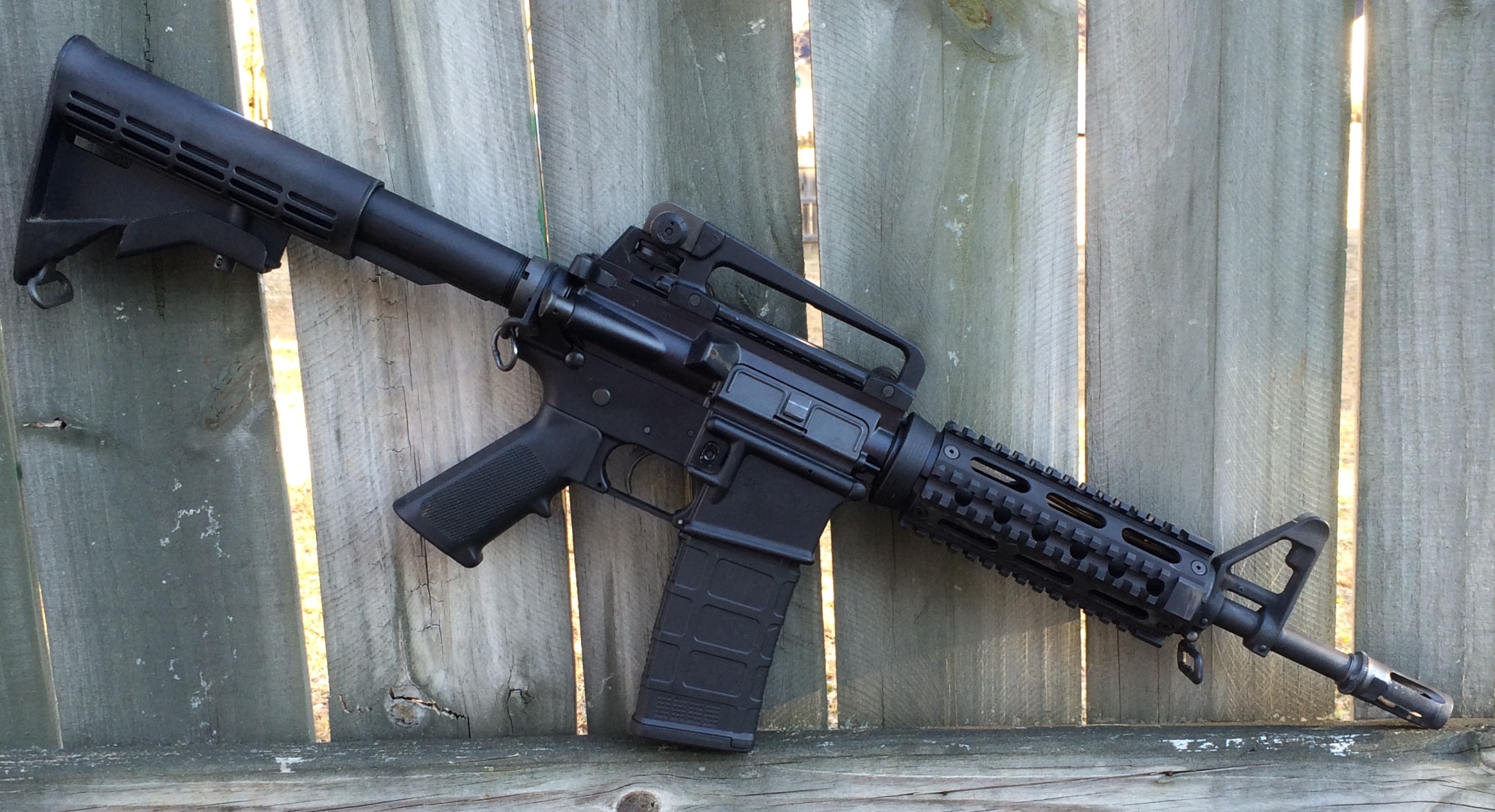
Photo Nov 30, 4 07 36 PM

FullSizeRender

My equipment:

I shot my issued shorty Colt M4LE carbine.  It is equipped with a YHM-9670 handguard.  I received and installed the handguard earlier this week.  I recently met the owners of YHM thanks to my friends at Sight Picture Media.  I like the feel and profile of the product and think it is a good addition to my carbine.   My lights were provided by Jamie Wiedeman of Surefire.  On my rifle was an older Surefire Scout light, and for my handheld, I tried two different versions of the Surefire Peacekeeper (dual output and the tactical).  I’ve been running the Scout light for several years, and it has been on more than one bad guy hunt.  This was the maiden voyage for the Peacekeeper lights.  I preferred the dual output light due to the “click on, click off” tail cap switch.  With the tactical version, my thumb came off the switch a couple of times during recoil; thus, the light turned off.  The tail caps can be switched, and I will play around with the clickable switch on the tactical version.  Thanks to Jamie for setting me up with the lights.  It was “almost like cheating.”

Thanks to this guy for the night vision pictures.

Thanks to this guy for the night vision pictures.
Walking in Their Shoes

You all know the old saying about not judging a person until you have walked in their shoes.

This weekend a horrible tragedy played out in Cleveland, OH.  The common thread among the media reports are that two officers from the Cleveland Police Department responded to a call of a young male waiving around a gun.  As the officers approach, one tells the young male to raise his hands.  Instead, the young male draws the pistol from his waistband at which time the officer fires.  The boy was killed.

The gun turned out to be an air-soft (fires plastic BBs) replica of a model 1911 pistol.

Some reports claim that callers mentioned the possibility of the gun being fake, but it is not clear whether this is accurate or if that information was relayed to the responding officers.  In the end, if this is indeed the case, it will certainly add more fuel to the angst fire, but it really doesn’t change the situation to any large degree as this information may certainly be taken into account by responding officers as it couldn’t be accepted as 100% reliable either.

Now for the walking in their shoes part…

I was working midnight shift on patrol.  Other units responded to a reported shooting, and they put out a look out for a very distinctive vehicle that passed by at the exact time of the shooting.  A short time later, I was dispatched to a fight in progress call.  As I arrived on scene, I see the vehicle described as being at the scene of the earlier reported shooting.  It was in fact the very same vehicle.  The vehicle was being chased by several people on foot who were running after it.  I told the people chasing the car to stay back; I caught up to the vehicle; and I initiated a stop on the car keeping in mind that it was very likely connected to the reported shooting.

As the vehicle stopped, the passenger immediately jumped out of the vehicle and turned toward me.  Light from a streetlight glinted off of what appeared to be a silver, metal object in his hand.  I drew my old S&W 4006 out of a Safariland 070 duty holster, and as I type this, I can clearly see the image of my Novak front sight superimposed over the center of his chest.

The object in his hand was a cell phone.

Had he made any move that looked threatening after I saw the light glinting from the object, I would have fired.  I have no doubt of this.  It all happened in split seconds, but the event plays over and over again in slow motion in my mind whenever I think of it.

In another instance, I almost shot a college student who swept back his jacket to show me that the gun that he was carrying was a toy gun.  He saw me, freaked, and turned towards me sweeping back his jacket.  In his mind, he needed to show the cop that he didn’t have a real gun.  All I saw was a guy spin toward me while sweeping his jacket out of the way and reaching for what appeared to be a pistol in a holster on his belt.

The only reason I didn’t fire was that I saw and recognized the power chord coming out of the butt of the pistol.

Yup.  He was carrying the pistol from his video gaming console.

The individuals in the car in the first incident had by pure coincidence driven by the scene of the reported shooting as it occurred.  They made the mistake of pulling into a fraternity parking lot to park their car.  The members of the fraternity took exception to this and the result was a fight.  The two guys jump back into the car (after one of them unleashes a can of pepper spray) and leave the parking lot with the fraternity members chasing them only for me to arrive at the same time.  In the second incident, the individual was a college student on the way to a costume party at a bar.  We happened to wind up in the same parking lot at the same time, and he freaked thinking the cop saw that he had a “gun”.

Both of these incidents could have easily resulted in “Cop Shoots Teenage Holding a Cell Phone” or “Cop Shoots College Student Armed with Video Game Pistol” headlines.

The decisions in those incidents were made in less than a second each.  It turned out that I was right both times.  The irony is that I could have been wrong and still been right.  I also could have been wrong and ended up dead.  That is the pure truth of the matter.  Life and death decisions made instantaneously, in real time, and without the benefit of slow motion replay to see if the ref blew the call.

Class Review: Way of the Gun Pistol Class

“If you are missing, you aren’t getting the work done.” -Frank Proctor

Frank explaining the Shake and  Bake exercise

Frank explaining the Shake and Bake exercise

I first met Frank Proctor of Way of the Gun when he taught a block of the FBI Police Firearms Instructor course that I attended in 2013.  When the members of our “C Shift” told me they had arranged for a private class with Frank, I quickly jumped on the spot offered to me.  It was a long day, but it was well worth it.  We left at 5:00AM so that we could get through Atlanta prior to rush hour traffic and didn’t get home until 9:00PM.  One additional challenge to the day was the weather as we experienced an overnight temperature drop of 25 degrees.  The temperature never got above the mid-40s, and it was windy.

As I have written previously, I prefer to train with instructors who have backgrounds in both the “tactical” and competition worlds, and Frank certainly fits this bill being both Army Special Forces as well as a USPSA Grand Master as well as an IDPA Master.

As the above video demonstrates, Frank is very much into “processing”.  This involves seeing and processing everything that is happening around you, and this translates into seeing the sight picture, tracking the sights during recoil, breaking the shot at the right time to so much more.

We began the day shooting an exercise on paper targets, and after each string, Frank would ask us questions about what we saw during the string, and he would then offer teaching points.  We also worked on properly gripping the pistol as well as recoil control.

Frank explaining property grip with Corporal Sparrow

Frank explaining property grip with Corporal Sparrow

Frank makes a point of saying that he utilizes exercises rather than drills as exercises can be “compounded” to add other things to them.  Throughout the day, we would shoot an exercise, and then he would add a twist or variation to the exercise building upon the previous work.  After the initial exercise on paper, we shot steel targets for the remainder of the day.

Frank Proctor coaching the author on the Shake and Bake exercise

Frank Proctor coaching the author on the Shake and Bake exercise

One of the first exercises that we shot on steel was the “Shake and Bake” exercise in which barrels were stacked upon top of each other to create a vision barrier.  The shooter had to move side to side completely compressing the pistol and then punch back out to the target.  The barrels were not “cover”.  They were there simply to block the shooter’s vision and to force movement.

We shot the exercise in the above video, but he had us moving through a row of staggered barrels as we did so.

Another exercise involved an array of targets with numbers painted on them and the shooters having to move through a row of barrels with each barrel having an index card with information on it telling us which targets to shoot.  As an example of compounding, this exercise was introduced with our simply moving through the barrels and shooting the targets in sequential order.  We then moved through the barrels again putting the number of hits on a target corresponding with the number that was painted on it, and then finally the exercise involving the information processing.  As a twist, the same exercise was set up in the an adjacent bay but with a different target array to avoid memorization of the information while at the same time providing for additional repetitions.

Deputy Brank shooting an exercise

Deputy Brank shooting an exercise

There was not any downtime during the day.  Frank told us to bring 600 rounds with us, and I think we all exceeded that number as we all were stuffing magazines as fast as possible to bang some more steel.

Deputy Thrower shooting an exercise

Deputy Thrower shooting an exercise

Deputy Pasdon shooting an exercise

Deputy Pasdon shooting an exercise

Frank’s teaching style is extremely relaxed and humorous.  You’ll also get serenaded and peppered with sound effects as well as movie one-liners that lead to teaching points.  As I wrote above, there isn’t any downtime in the day.  If we weren’t shooting, we were loading magazines.  You’ll get a lot of material thrown at you, but it will be in a manner that you will readily understand and is often a tweak or a unique insight on something the student has already heard previously, but the presentation “compounds” the previously obtained information.  Also, he breaks things down to be done efficiently with the subconscious mind being allowed to control the simple things with the conscious mind focussing on processing.  To drive this point home, “Walking isn’t hard until you think about it”.  In others words, just walk and don’t think about walking while you are walking.  Another example would be driving a vehicle and looking through the windshield.  You are making constant inputs to control and steer the vehicle, but you really aren’t thinking about them as you do them.  This can be applied to shooting as well.  Focus on the things that need focus and just do the other stuff naturally.  Oh yeah, and PROCESS.

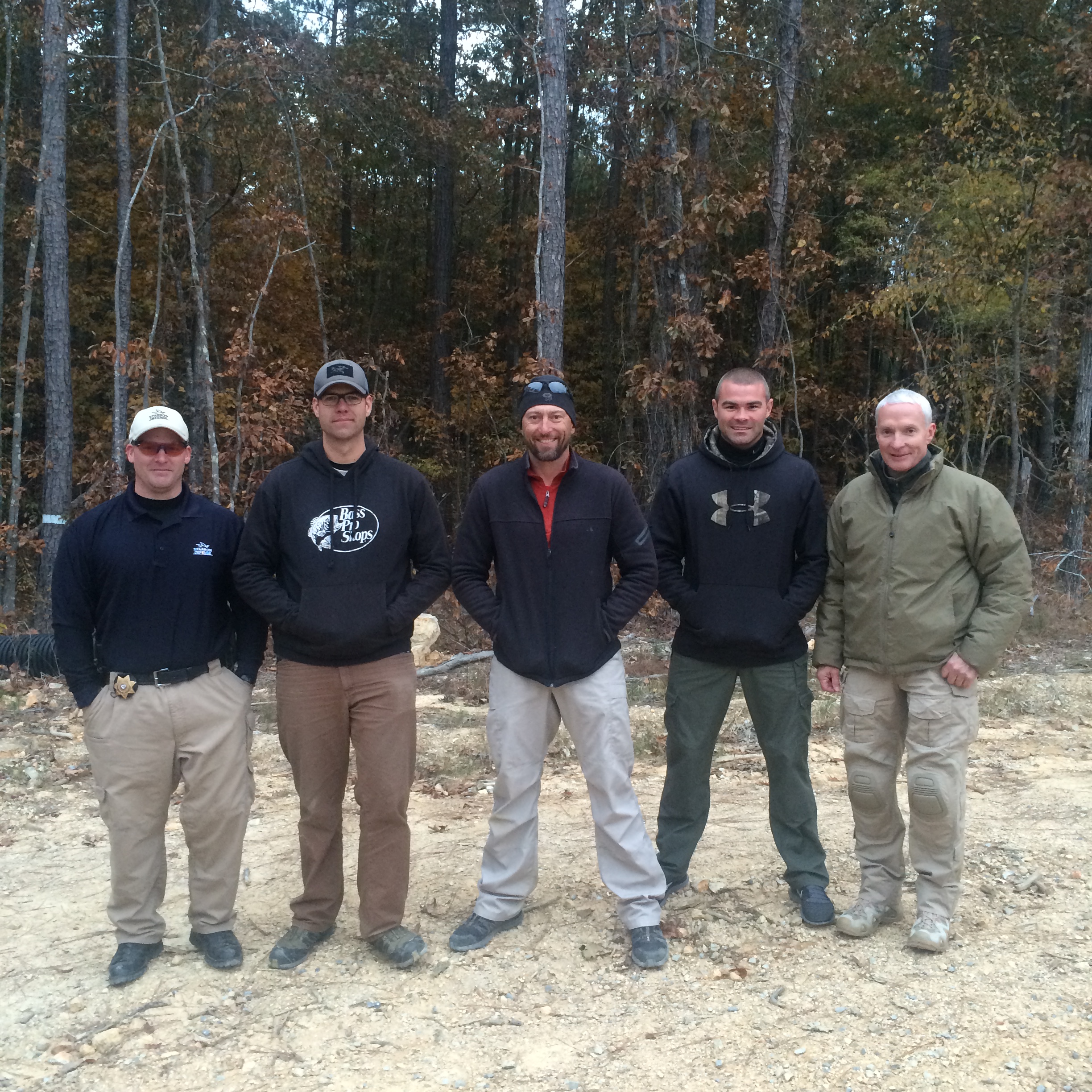
Frank Proctor and "C Shift"

Frank Proctor and “C Shift”